
Short answer
The garage door doesn't go away just because the space behind it became a gym, office, or workshop. It's still the largest moving part on your house, it's still an exterior opening that has to meet wind-load requirements, and it still has to deal with Florida heat and humidity. What changes is how much attention it needs — and ignoring it is the mistake, not the renovation itself.
The door doesn't go away — it just gets a new job
Unless you've physically removed the door and framed in a wall (which is a permit-level construction project, not a weekend project), the garage door is still there, still attached to the opener, and still the thing standing between your new home gym and a thunderstorm. A lot of homeowners treat the conversion like the door is now decorative. It isn't. If the opener still has power and the door still rolls up and down, it's a functioning system that needs the same maintenance as before — arguably more, because now there's drywall, flooring, or workout equipment that will get ruined if something fails.
Humidity and heat turn into real problems fast
A converted garage usually gets closed up more — fewer reasons to leave it open for airflow once there's carpet or rubber flooring down. That traps moisture. Combine that with Florida's humidity and afternoon downpours, and you get the classic symptoms: swelling wood-composite panels, rust forming on hinges and tracks, and a musty smell that wasn't there before. If you've added window units or run a mini-split into the space, the temperature swings between the AC-cooled room and the outside heat can also stress the door's weatherstripping, making gaps bigger over time.
If the room gets used daily — a home gym, a kids' playroom, a workshop with tools you don't want rusting — it's worth checking the bottom seal and weatherstripping every few months instead of once a year. Salt air if you're closer to the coast accelerates the same problems on hardware and springs.
If you're keeping the door functional (most people do)
Most conversions keep the door operable because it's still useful for moving furniture, gym equipment, or lumber in and out, and because sealing it permanently is expensive and often unnecessary. If that's your plan:
- Insulate the door itself. An insulated garage door panel does double duty — it helps keep the new room's temperature stable and reduces condensation on the inside of the door, which is what causes rust on hardware and staining on drywall.
- Check the opener's duty cycle. If the room gets used more (gym equipment going in and out, kids coming and going), the opener is cycling more often. An aging opener that was already due for replacement will show it faster under more use.
- Don't skip tune-ups. Springs and cables wear by cycle count, not by calendar age. More daily use means more wear, even if nothing looks wrong yet.
If you're sealing it off completely
Some homeowners go further and either remove the door and frame a permanent wall, or leave the door in place but functionally abandon it — never opening it, letting the opener sit unused. Both approaches have trade-offs:
- Removing the door means dealing with it like actual construction — insulation, vapor barrier, and exterior-grade finishing, since that wall is now exposed to the same wind and rain the door used to handle.
- Leaving it in place but unused is the option that causes quiet damage. A door that never moves still has springs under tension, cables that can fray, and rollers that seize up from rust and lack of lubrication. If you ever do need to open it — moving out a couch, letting a contractor in — it can fail hard, sometimes dangerously, because nobody noticed the slow deterioration.
If you're going this route, at minimum cycle the door a few times a month and keep an eye on obvious rust or binding.
Hurricane season doesn't care what you use the garage for
Here's the part that settles most arguments: the door is still an exterior opening on your house, which means it's still subject to wind-load expectations whether there's a car behind it or a treadmill. A door that isn't rated for the wind loads common in this area is a weak point in a storm regardless of what room it's protecting. If the conversion involved swapping in a lighter, non-rated door panel for aesthetic reasons, that's worth double-checking before the next storm season rolls around.
When to call Lutz Garage Door Pro
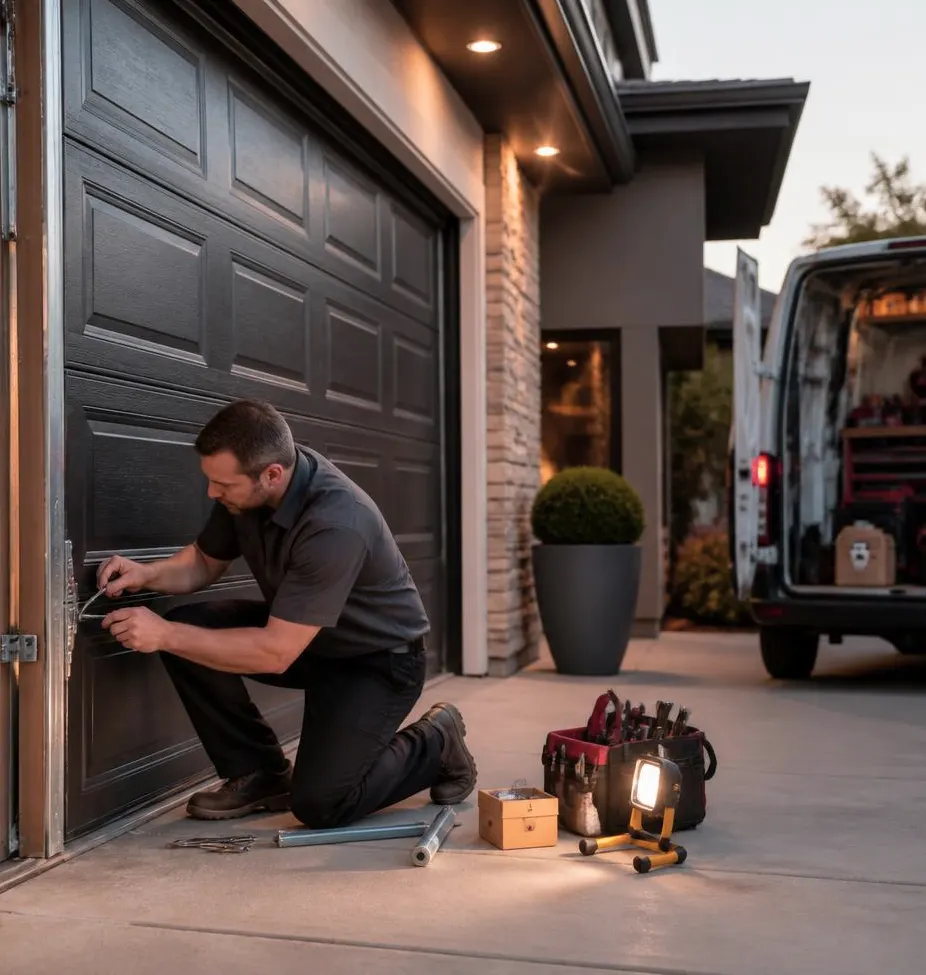
If you're insulating the door as part of a conversion, replacing a damaged panel, or you've noticed the door binding, rusting, or struggling since the room started getting more use, that's when to bring in a technician instead of guessing. We handle Garage Door Panel Replacement for homeowners upgrading to insulated panels during a renovation, and Garage Door Tune-Up & Maintenance for doors that are suddenly cycling more often than they used to. We'll look at the springs, cables, and opener together, tell you honestly what's wearing out versus what's fine, and fix what actually needs it.
If your garage is turning into something other than a garage, give Lutz Garage Door Pro a call before the door becomes the thing nobody thought about. We serve Lutz, Land O' Lakes, Wesley Chapel, Odessa, Carrollwood, Tampa Palms, New Tampa, and Citrus Park.