
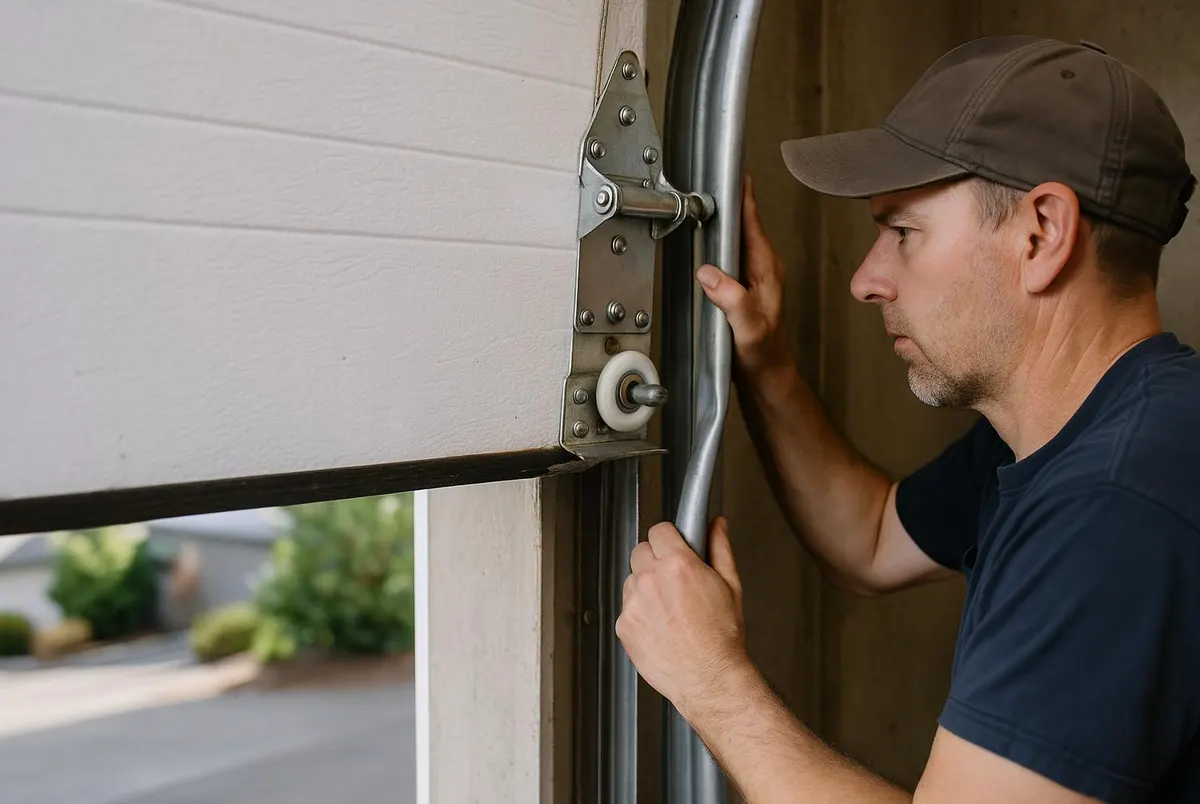
The Mistake: Judging Balance By Watching The Opener
Most homeowners test their garage door's balance the same way, without realizing it's not a test at all: they press the button, watch the door glide open, and think, well, it's not struggling, so it must be fine. It's a tempting shortcut because it feels like common sense. If the motor can lift the door smoothly, what's left to check?
Here's the problem. A garage door opener is built with enough reserve power to lift a door that's poorly balanced, sometimes for months. It just quietly works harder to do it. The springs are supposed to carry almost all of the door's weight; the opener's only job is to roll it up and down along the track. When the springs lose tension, the opener's motor, gears, and drive mechanism start doing the heavy lifting instead, which is exactly what they were not built to do long-term.
What An Unbalanced Door Is Actually Doing To Your Opener
Over time, an unbalanced door leads to a specific, predictable chain of wear: the motor runs hotter and louder, the drive gear strips or skips, the trolley carriage strains against the rail, and the opener's travel/force settings get bumped up again and again just to compensate. None of that fixes the real issue. It just burns through the opener faster, and in Lutz's heat and humidity, components that are already working overtime tend to fail sooner. Afternoon downpours and the swelling they cause in tracks and panels add just enough extra resistance that a borderline-balanced door can tip into a real problem during storm season.
Tools You'll Need
- A sturdy step ladder
- Work gloves
- A flashlight
- A second person to help, especially on taller doors
How To Test Garage Door Balance Yourself
- Close the door fully. Start from a dead stop so you're testing true weight distribution, not momentum.
- Disconnect the opener. Pull the red manual release cord so the door is no longer connected to the opener arm. You're now testing the door and springs alone.
- Lift the door by hand to about waist height. Go slowly and use both hands if you're not confident in the weight.
- Let go and watch what happens. A balanced door should stay roughly in place, or drift down just a few inches on its own. It should not slam shut and it should not shoot upward.
- Repeat at a second height, around shoulder level, to confirm the behavior is consistent along the full travel of the door, not just at one point.
- Do a visual check on the springs while the door is open. Look for visible gaps between coils, rust streaks (common after humid stretches), or a spring that looks stretched compared to its twin on the opposite side. Do not touch, adjust, or try to tighten the springs yourself.
- Reconnect the opener once you're done and run the door through a normal open/close cycle, listening for any new grinding, clicking, or hesitation.
What You Can Safely Handle
The hand-lift test above is safe for most homeowners, along with a visual inspection of the springs, cables, and tracks for rust, fraying, or gaps. If everything looks and feels right, that's a good sign.
What Needs A Technician
If the door drifts down fast, bounces back up on its own, or feels noticeably heavier on one side than the other, stop there. Torsion springs are under extreme tension and adjusting them requires specific tools and training, this is not a DIY repair, no matter how straightforward it looks online. Cable issues, bent tracks, and worn spring cones also fall squarely in technician territory, since a mistake with any of them can snap a cable or drop a door suddenly.
When To Call Lutz Garage Door Pro
If your balance test shows the door drifting, slamming, or resisting unevenly, that's the point to call in a professional rather than keep adjusting the opener's force settings to compensate. Our Garage Door Spring Repair service corrects the actual tension problem instead of masking it, and our Garage Door Tune-Up & Maintenance visit covers a full inspection of springs, cables, rollers, and tracks, checking for the rust and swelling that humid Florida air causes over a season of use. We'll show you exactly what we find before we touch anything.
If you're in Lutz, Land O' Lakes, Wesley Chapel, Odessa, Carrollwood, Tampa Palms, New Tampa, or Citrus Park and your garage door isn't passing its own balance test, give Lutz Garage Door Pro a call. We'll come out, diagnose it honestly, and get it fixed right the first time.